
News analysis ·
ECB Pauses Interest Rates: What Forex Beginners Must Know
The ECB held interest rates steady as energy prices pushed inflation to 3.8 per cent. Here is what rate pauses mean for the euro and beginner risk.
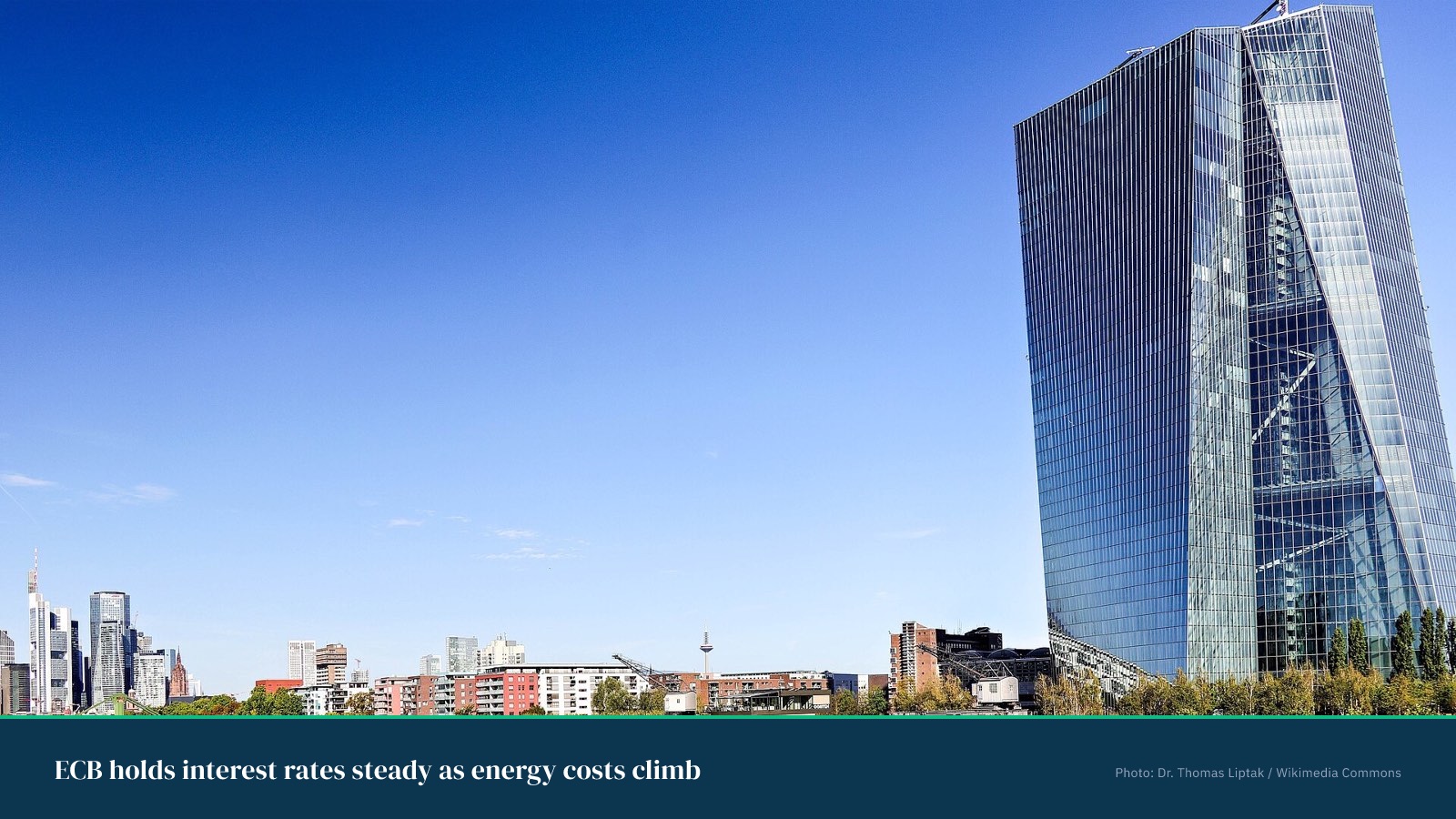
The European Central Bank, or ECB, decided to keep its key interest rates unchanged at its policy meeting on 29 October 2026. Policymakers face a tricky balance between rising energy costs and softening business borrowing. This article explains how central bank interest rates influence the euro and why rate announcement days carry high risk for beginner forex traders.
What the ECB Decided on Rates
According to the ECB, the Governing Council kept its three primary policy interest rates unchanged at its meeting on 29 October 2026. The deposit facility rate remains at 2.50%. The main refinancing operations rate stays at 2.65%, and the marginal lending facility rate stays at 2.90%. These benchmarks set the price of credit across the euro area. The deposit facility rate is what commercial banks earn when they store overnight funds with the central bank, while the other rates govern short-term borrowing.
Beyond headline interest rates, the Eurosystem confirmed it is continuing to run down its Asset Purchase Programme (APP) and Pandemic Emergency Purchase Programme (PEPP) bond portfolios at a predictable pace. It achieves this by halting principal reinvestments from maturing debt. In addition, the ECB noted that its Transmission Protection Instrument stands ready to prevent disorderly bond market dysfunction from disrupting monetary policy across member economies.
Rising Energy and Core Inflation Pressures
The rate hold arrived against an uncomfortable rise in consumer prices. The ECB reported that headline consumer inflation across the euro area reached 3.8 per cent in September, accelerating from 3.2 per cent recorded in August. Much of that jump came from power and fuel. Annual energy inflation jumped from 14.3 per cent in August to 18.9 per cent in September, driven partly by elevated refining margins and fuel costs. When excluding energy, core price inflation picked up to 2.3 per cent during September after standing at 2.1 per cent the previous month.
The central bank reiterated its commitment to returning euro area inflation sustainably to its 2% medium-term target. Yet higher energy costs create conflicting pressures. ECB President Christine Lagarde described the dilemma clearly: "Energy prices have continued to rise, posing upside risks to the inflation outlook and downside risks to the growth outlook."
Other economic data paint a mixed picture. ECB wage tracking indicates that negotiated pay gains are projected to average 2.6 per cent across the opening three quarters of 2027, after spanning 2.5 per cent to 2.8 per cent in late 2026. Meanwhile, corporate borrowing terms hardened as market debt financing costs hit 4.1 per cent in August, contributing to a drop in business loan demand. August unemployment held steady at 6.4 per cent across the euro area, and third-quarter economic activity received support from technology spending.
Why Currencies Care About Central Bank Rates
To understand why currency traders watch central banks, beginners must understand the concept of interest rate yield. In foreign exchange, or forex, a currency is traded in pairs, such as the euro against the US dollar. When a central bank raises interest rates, assets denominated in that currency tend to pay a higher return to global deposits and government bonds. International capital often flows toward currencies with higher yields, which can lift exchange rates.
Conversely, when a central bank stops raising rates or prepares to cut them, that yield advantage can fade. But inflation complicates this relationship. If inflation accelerates while rates stay unchanged, real returns minus inflation can decline, weakening investor appetite for the currency. On the other hand, if traders expect that persistent inflation will eventually force the central bank to hike rates in future meetings, the currency may find temporary support. This push and pull is why rate decisions often trigger sharp, contradictory price moves within minutes of an announcement.
Beginner Risk Check on Rate Decision Days
New traders often make the mistake of treating central bank rate decisions as easy trading opportunities. In reality, interest rate announcement days are among the most hazardous sessions in the forex market.
- Sudden spread widening: Forex brokers widen the spread—the gap between the bid price and the ask price—during major economic releases because liquidity providers pull back quotes to avoid severe volatility.
- Severe price slippage: Rapid market reactions mean orders often execute far from the planned entry or stop loss price, turning a modest expected loss into a damaging drawdown.
- Leverage magnification: Using leverage allows traders to control large positions with small deposits, but unexpected price swings on rate days can quickly wipe out account equity or trigger forced stop outs.
Beginners should view central bank announcement days as opportunities to observe market mechanics from the sidelines rather than sessions to gamble on short-term price direction.
What to Watch Next
The ECB confirmed that policymakers are not committing in advance to any specific rate path. Instead, the Governing Council is adopting a meeting-by-meeting approach that depends strictly on incoming economic data.
For forex beginners following the euro, this means future exchange rate trends will not hinge on promises, but on incoming inflation reports, wage metrics, and growth indicators. Until the balance between energy-driven inflation and tightening corporate credit becomes clearer, euro pairs are likely to remain sensitive to macroeconomic surprises.
Sources
This article was produced by AI from the cited sources and published automatically after automated checks (figures traced to sources, no copied phrasing); it was not edited by a person. It is beginner education, not trading advice.