
News analysis ·
ECB's Rehn on energy inflation: what the euro hears
ECB policymaker Olli Rehn says inflation is mostly energy-driven and rates are set meeting by meeting. What that means for the euro and for beginners.
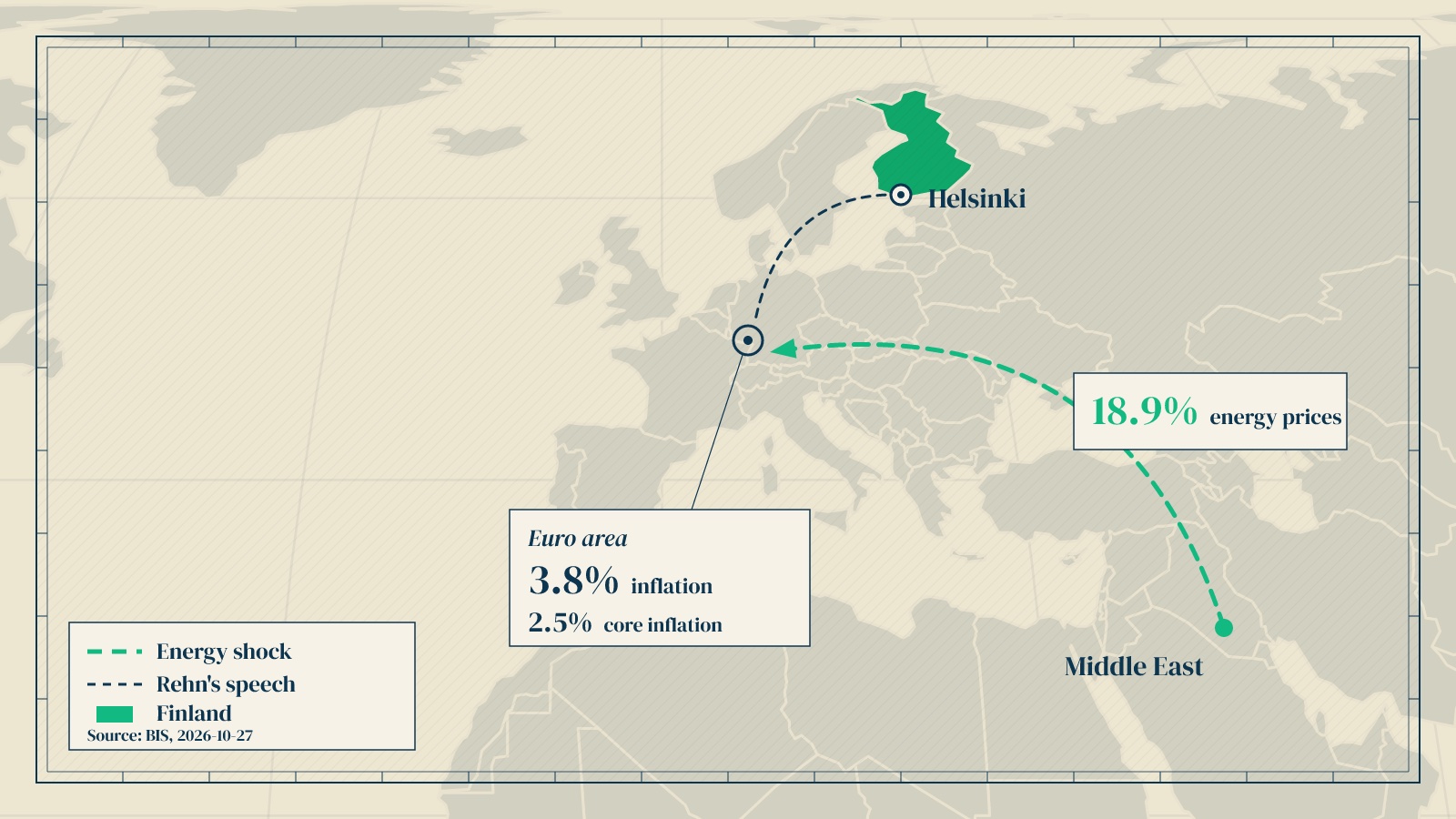
Olli Rehn, Governor of the Bank of Finland, says the recent jump in inflation is mostly about energy and has not yet spread through the wider economy. The speech, given at a CEPS Macro group webinar in Helsinki on 20 October 2026 and published by the BIS, also repeats that the ECB will not promise any rate path in advance. This article looks at what he said, why a currency listens to words like these, and how a beginner should treat the days around ECB news.
What Rehn actually said
According to the text published by the BIS, euro area inflation was 3.8 percent in September. Energy prices were up 18.9 percent. Core inflation, which leaves out energy and food, was much lower at 2.5%. Rehn's point is that the rise sits in a narrow group of goods and services tied to energy, such as fuels, electricity and transport. He noted that just 19 of 136 HICP sub-components had inflation above 5%. HICP is the official consumer price index the ECB uses.
He linked the energy shock mainly to the conflict in the Middle East and to how that shock passes through the economy. The ECB already raised its key rates by 0.25 percentage points at its September meeting. Rehn said the inflation outlook and its risks justified that move.
On what comes next, he was careful. The ECB decides meeting by meeting, using fresh data, analysis and judgment, and does not commit to a path. Its next steps, he said, depend on whether so-called second-round effects appear. In his words: "So far, we have not seen second-round effects." He still called for continued vigilance.
Second-round effects, explained simply
A first-round effect is the direct hit: oil and gas get more expensive, so fuel and power bills rise. A second-round effect is what can follow. Workers ask for higher wages to keep up, firms raise prices on unrelated products, and inflation becomes broad and sticky. Central banks worry far more about the second kind, because it does not fade on its own when energy prices calm down.
Rehn gave reasons why he sees limited signs of this so far. He contrasted today with 2022. Growth momentum is subdued, labour markets are less tight, and wage growth has eased. He also said higher rates and rate expectations have already pushed up bank lending rates for households and firms. That can cool demand for credit, and with it, inflation.
Why currencies care
A currency's value is partly a story about interest rates. If markets expect a central bank to keep rates high or raise them further, holding that currency can become more attractive, because money parked in it may earn more. If markets expect the bank to pause or ease, that support can fade. The exchange rate is simply the price where those views meet.
This is why a speech with no decision in it can still matter. When a policymaker says inflation is narrow and energy-driven, some traders may read it as less pressure for more hikes. Others may focus on his call for vigilance and on headline inflation still above target. The same words can be read in different directions, and the euro can move as those readings shift. Nobody can know in advance which reading wins on a given day.
The ECB's own projections from September add context. They see headline inflation averaging over the 2% goal next year, with core at 2.6%, then headline easing to 2.1% in 2028 and core to 2.3%. Growth forecasts were raised to 0.9% this year, then 1.4% and 1.5% in the next two years, with the Middle East conflict named as a downside risk. When new projections differ from old ones, expectations about rates can change, and so can the euro.
Beginner risk check
Central bank speeches and meetings are classic high-risk moments for new traders. A few things to keep in mind:
- Volatility: EUR pairs can jump in both directions within minutes when a policymaker speaks or a decision lands, and moves can reverse just as fast.
- Spreads: the gap between the bid and ask price often widens around big news, so simply opening and closing a trade costs more than on a quiet day.
- Leverage: borrowed exposure magnifies every pip of movement, so a sharp swing on a news day can wipe out a small account far faster than expected.
Many beginners simply stay out on these days, or watch on a demo account to learn how prices behave without real money at risk.
What is scheduled next
Rehn said updated macroeconomic projections will be on the table at the ECB's December meeting. That makes December a date beginners may want to mark on an economic calendar, not as a trade signal, but as a day when the euro is more likely to be jumpy. Until then, inflation releases will show whether price rises stay narrow or start to spread, which is the very question Rehn put at the centre of policy.
Sources
- BIS, 27 Oct 2026
This article was produced by AI from the cited sources and published automatically after automated checks (figures traced to sources, no copied phrasing); it was not edited by a person. It is beginner education, not trading advice.