
News analysis ·
Bowman Puts Inflation First: The Dollar Explained
Fed Vice Chair Bowman says slow progress on inflation is now her focus. What that means for the US dollar, and why beginners should be careful.
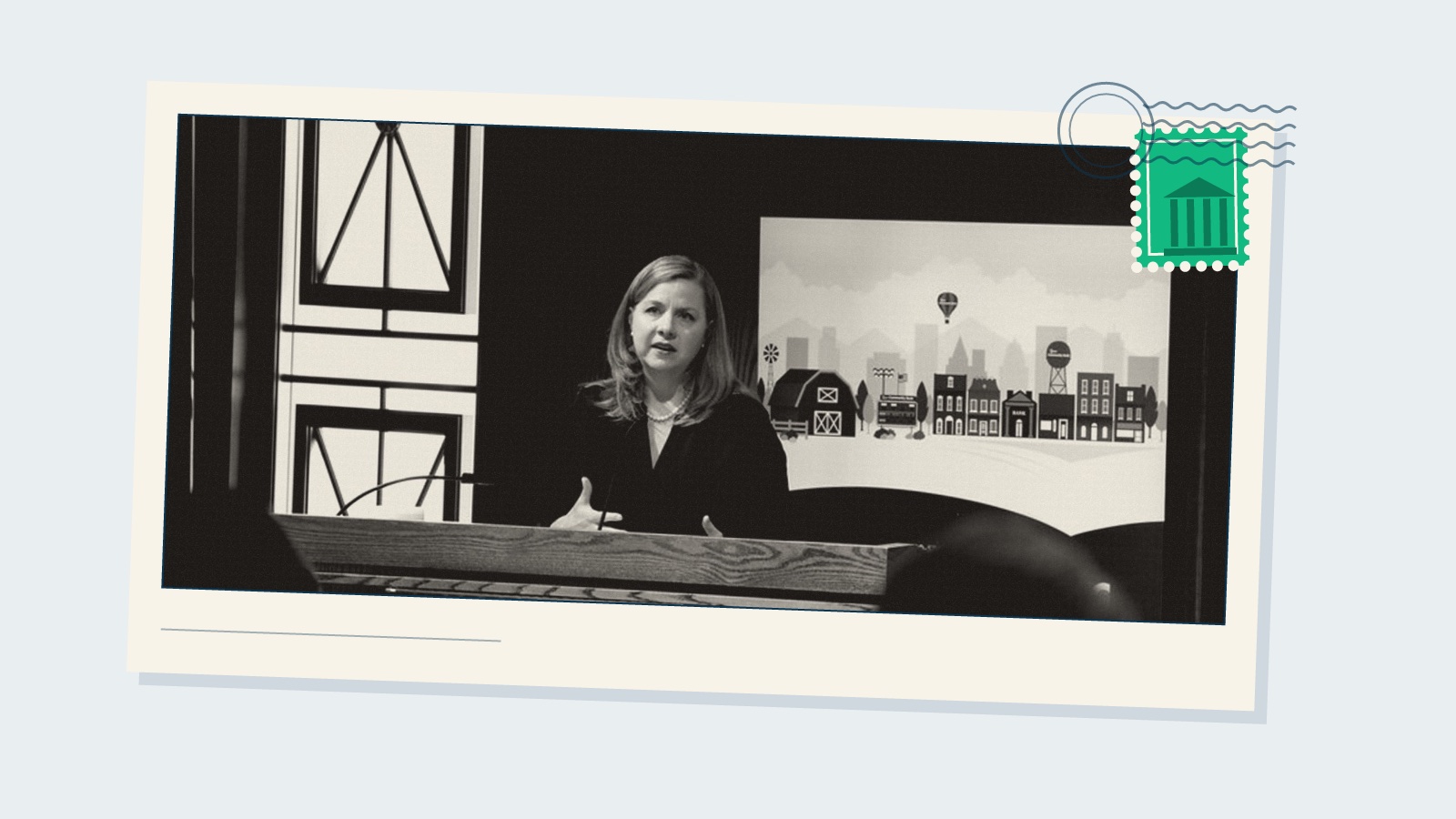
Michelle W. Bowman, the Federal Reserve's Vice Chair for Supervision, said in a new speech that inflation is proving more stubborn than she expected and that bringing it down remains a priority. The Federal Reserve published the remarks, and the BIS later republished them. This article explains what she said, why a speech like this can matter for the US dollar, and why beginners should treat such days with care.
What Bowman said
Bowman spoke about the US outlook at the Council on Foreign Relations in Washington, D.C. According to the text published by the Federal Reserve, she supported the decision at the October meeting of the FOMC, the committee that sets US interest rates, to leave the federal funds rate unchanged. Its target range stays at 3-3/4 to 4 percent.
Her reason for holding was patience. She wants to see how the economy develops, and how the recent rate increase feeds through, before the Fed moves again. Her overall message was summed up in one line: "While the labor market has improved more than I expected this year, our progress on lowering inflation has disappointed."
The numbers she gave support that view. She estimated that core PCE inflation, a measure the Fed watches closely that leaves out volatile food and energy prices, probably rose to 3.3 percent over the 12 months to October. The labor side looks steadier: the jobless rate was 4.1 percent in October after drifting lower, and monthly job gains averaged about 80,000. She put real GDP growth at 2.4 percent in the first half of the year, and said third-quarter growth was likely more than 3 percent.
Where she thinks inflation comes from
Bowman split the excess inflation into parts. In her view, tariffs, energy and demand linked to artificial intelligence each explain roughly one-fourth of core PCE inflation above the Fed's target. Lingering effects of past price shocks explain the rest.
Energy is a large part of the story. She said Brent crude reached $110 per barrel and above during the second half of October, then fell sharply last week on hopes of a US-Iran agreement. She prefers to look past temporary energy-driven inflation where possible, while watching for signs that it spreads into wider prices or expectations. She still forecasts core PCE inflation moving closer to 2 percent next year.
Because the job market is better than last year, she said she is now paying more attention to the inflation side of the Fed's mandate, which is its legal duty to aim for both stable prices and maximum employment. According to the BIS version of the speech, she also said energy markets and the AI buildout could shape her views on the future path of policy.
Why currencies care
A currency's value against another currency is called the exchange rate. One of the biggest forces behind exchange rates is the interest rate a central bank sets. When US rates are high, or expected to stay high, savers and investors can earn more by holding dollar assets. That can raise demand for dollars. When rates are expected to fall, the opposite pull can appear.
This is why a speech can move a currency even when no decision is made. Markets constantly try to guess the next rate move. If a policymaker sounds more worried about inflation than about jobs, traders may conclude that rate cuts are less likely, or that holding rates high for longer is more likely. In principle, that tends to support the currency. If a speech sounds calmer about inflation, the effect can run the other way.
On a chart this shows up in currency pairs such as EUR/USD. The dollar is the quote currency there, so a stronger dollar would push that pair lower. Bowman herself noted that a stronger dollar was one reason US financial conditions tightened somewhat lately, along with lower stock prices and higher private borrowing rates. None of this works like a switch. Other news, other central banks and what was already expected all matter too.
Beginner risk check
Speeches, data releases and rate decisions are some of the most unpredictable moments in forex. Before trading around them, keep these points in mind.
- Volatility: prices can jump many pips in seconds and reverse just as fast, so a move that looks clear can vanish before you react.
- Spreads: the gap between the bid and ask price often widens around big news, which makes every trade more expensive and can trigger stop losses early.
- Leverage: borrowed exposure magnifies both gains and losses. Leveraged forex trading can lose money quickly, and on a fast news day a small swing can wipe out much of a small account.
These risks apply even when a speech sounds calm, because nobody knows in advance how markets will read it.
What to watch next
The source gives no dates for upcoming events. It does say what could shape Bowman's views on policy: energy markets and the AI buildout, and whether inflation spreads into wider prices or expectations. She flagged risks such as a big drop in stock valuations if returns on AI investment disappoint, and a sharp jump in private long-term interest rates.
Sources
- Federal Reserve, 10 Nov 2026
- BIS, 12 Nov 2026
This article was produced by AI from the cited sources and published automatically after automated checks (figures traced to sources, no copied phrasing); it was not edited by a person. It is beginner education, not trading advice.