
News analysis ·
Lagarde on the Euro's Global Role: A Beginner's Guide
ECB President Lagarde set out steps to make the euro easier to use abroad. We explain what that means for EUR pairs and why such news is high-risk.
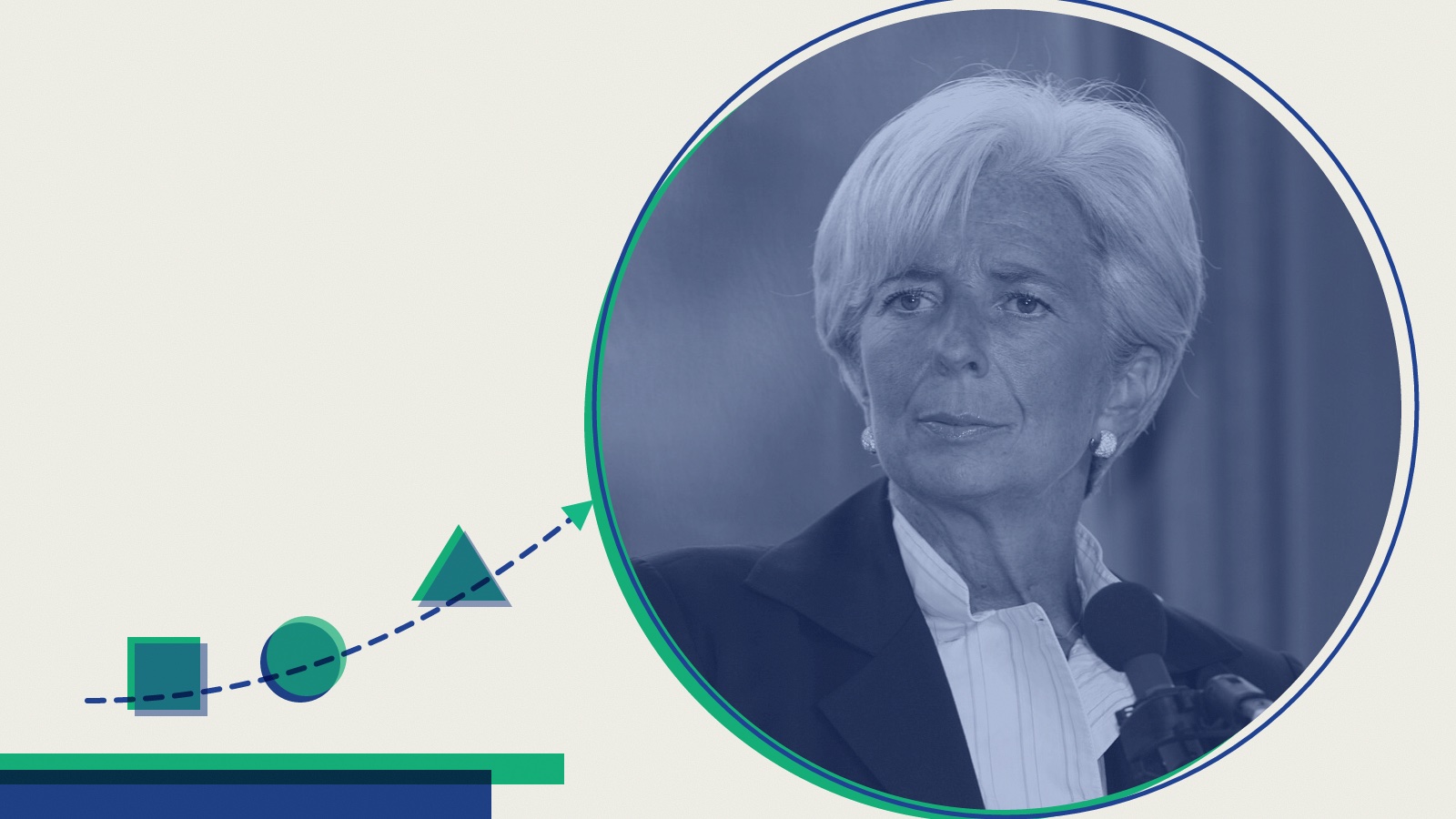
ECB President Christine Lagarde used a speech called Acting in time, published by the ECB on 2026-11-20, to describe how the central bank is trying to make the euro easier to use outside Europe. It was not a rate decision, and it set no new interest rate. This article explains what a bigger international role for a currency actually means, how it can matter in principle for pairs like EUR/USD, and why beginners should stay cautious.
What Lagarde said about the euro abroad
According to the ECB, Lagarde told a congress she had addressed eight times as president that this would be her last appearance there in the role. Her wider theme was timing. Europe, she argued, moves quickly when a crisis is obvious but hesitates when risks build slowly, and by then the best moment has often passed.
On the currency itself, Lagarde said the ECB was neutral about the euro's international role for most of its history. It shifted to a more supportive line shortly before her term began, and it has acted on that line since. She was clear that price stability remains the bank's primary objective. Economic sovereignty, she said, is not a goal in itself for the ECB.
She listed several practical steps. The ECB is linking TIPS, its instant payment system, to fast payment systems in other regions. In February it turned EUREP, its repo line for other central banks, into a permanent facility that any central bank worldwide can use, and Lagarde said more than 30 central banks have shown interest. The ECB is also updating its swap lines so they suit a more fragmented world and are easier to access.
Why currencies care: who wants to hold the euro
An exchange rate is simply the price of one currency in terms of another. In EUR/USD, the euro is the base currency and the US dollar is the quote currency, so the rate tells you how many dollars one euro buys. Like any price, it reflects how much people want to buy or hold each side.
Interest rates are the best-known driver. Higher rates in one area can make holding that currency more attractive, which is why rate decisions move markets so much. But demand also comes from slower, structural sources: companies paying for goods, governments borrowing, and central banks keeping reserves. Lagarde's speech was about these slower sources.
Her logic runs like this. If more global trade is priced in euro, European firms face less exposure to exchange rate moves. As she put it, "the more of our trade is invoiced in euro, the less exposed we are to swings in exchange rates." She also argued that a currency widely held by global investors lowers Europe's financing costs.
The liquidity lines fit the same picture. Lagarde said their main job is to keep monetary policy working in a crisis by stopping turmoil abroad from spilling into euro area markets. A side effect, in her view, is that a reserve manager who knows euro securities can be swapped for euro cash without dumping them at a loss is more willing to keep them during quiet periods.
What this does and does not mean for EUR pairs
It is tempting to read a speech like this as a signal about where the euro is heading. That would be a mistake. Changes in who holds a currency happen over years, not hours, and they are mixed in with interest rates, inflation, growth and risk mood. No single speech tells you the next move in EUR/USD.
What it does give a beginner is context. When you see the euro discussed as a reserve or invoicing currency, you now know the mechanism: steady demand from trade and reserves can support a currency in principle, while rate decisions tend to cause the sharp short-term moves you see on a chart.
Beginner risk check
Speeches by central bank leaders can still move prices, especially if traders read them as hints about future rates. On such days, keep three points in mind.
- Volatility: prices can jump in seconds while a speech is being read, and moves can reverse just as fast.
- Spreads: the gap between bid and ask prices often widens around big news, so each trade costs more than usual.
- Leverage: borrowed exposure magnifies small price moves, so leveraged forex trading can lose money quickly, and a fast swing can drain a small account.
Practising on a demo account during these periods is a low-cost way to see how prices behave without risking money.
What comes next
Lagarde said that if lawmakers pass the digital euro legislation before this year closes, the ECB is targeting 2029 for the first digital euros to be issued. She pointed out that card networks based outside Europe process more than 60% of card payments in the euro area, and that 14 of the 21 countries sharing the euro run no card scheme of their own. In September the ECB also launched Pontes, which lets tokenised transactions settle in central bank money, and this month the European Stability Mechanism used it to settle a €1 billion digitally native bond.
She added a caveat. Infrastructure alone is not enough, and common rules for tokenised markets depend on legislators, not the ECB. So the timeline for these projects is not fully in the central bank's hands.
Sources
- ECB, 20 Nov 2026
This article was produced by AI from the cited sources and published automatically after automated checks (figures traced to sources, no copied phrasing); it was not edited by a person. It is beginner education, not trading advice.